Aviation Week and Space Technology
In Partnership With
Boeing

 January 12, 1976
P. 45 (5 Pages)
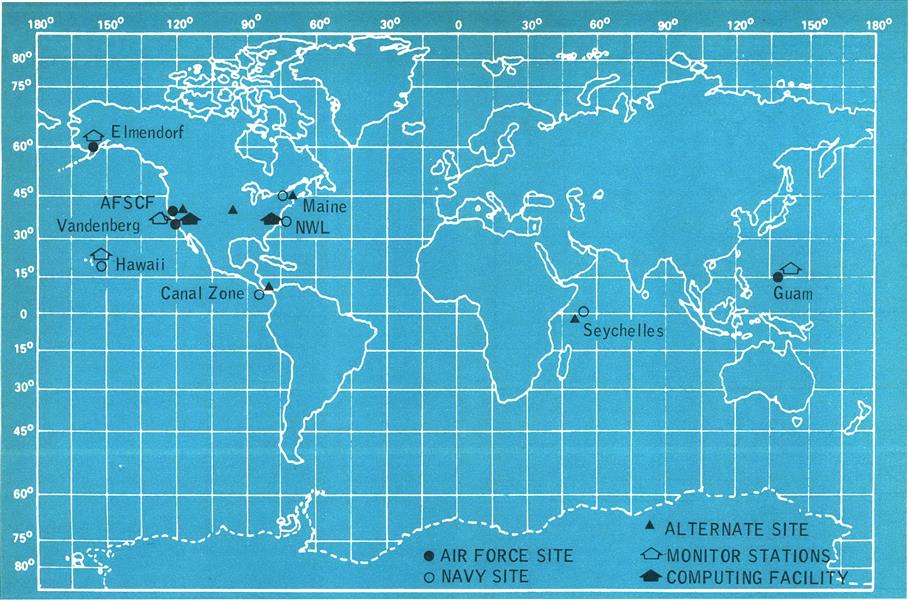
Map indicates sites of planned or alternative locations of control segment stations for DOD’s projected Global Positioning System. Master control station will be at Vandenberg AFB. Four monitor stations will be at Guam, Elmendorf AFB in Alaska, Hawaii and Vandenberg.
January 12, 1976
P. 45 (5 Pages)
Map indicates sites of planned or alternative locations of control segment stations for DOD’s projected Global Positioning System. Master control station will be at Vandenberg AFB. Four monitor stations will be at Guam, Elmendorf AFB in Alaska, Hawaii and Vandenberg.
 APRIL 29, 1996
P. 64
Rockwell is scheduled to deliver the first Block 2F Global Positioning System Satellite in 2001 as a replenishment for the GPS constellation.
APRIL 29, 1996
P. 64
Rockwell is scheduled to deliver the first Block 2F Global Positioning System Satellite in 2001 as a replenishment for the GPS constellation.
 January 12, 1976
P. 45 (5 Pages)
January 12, 1976
P. 45 (5 Pages)
 January 12, 1976
P. 45 (5 Pages)
January 12, 1976
P. 45 (5 Pages)
 January 12, 1976
P. 45 (5 Pages)
Specialized antenna, shown mounted above rotor blade of helicopter model (above, left), will enable military helicopter to receive navigation signals from projected tri-service Global Positioning System satellites. General Dynamics/Electronics is responsible for developing ground control and user equipment for the satellite-based navigation network. Rockwell Navigation Development Satellite (right) undergoes antenna tests at Rockwell’s Space Div. Satellite has 12-element array for transmitting signals to multiple users. First launch is scheduled for March,
January 12, 1976
P. 45 (5 Pages)
Specialized antenna, shown mounted above rotor blade of helicopter model (above, left), will enable military helicopter to receive navigation signals from projected tri-service Global Positioning System satellites. General Dynamics/Electronics is responsible for developing ground control and user equipment for the satellite-based navigation network. Rockwell Navigation Development Satellite (right) undergoes antenna tests at Rockwell’s Space Div. Satellite has 12-element array for transmitting signals to multiple users. First launch is scheduled for March,
 October 9, 1978
P. 60 (3 Pages)
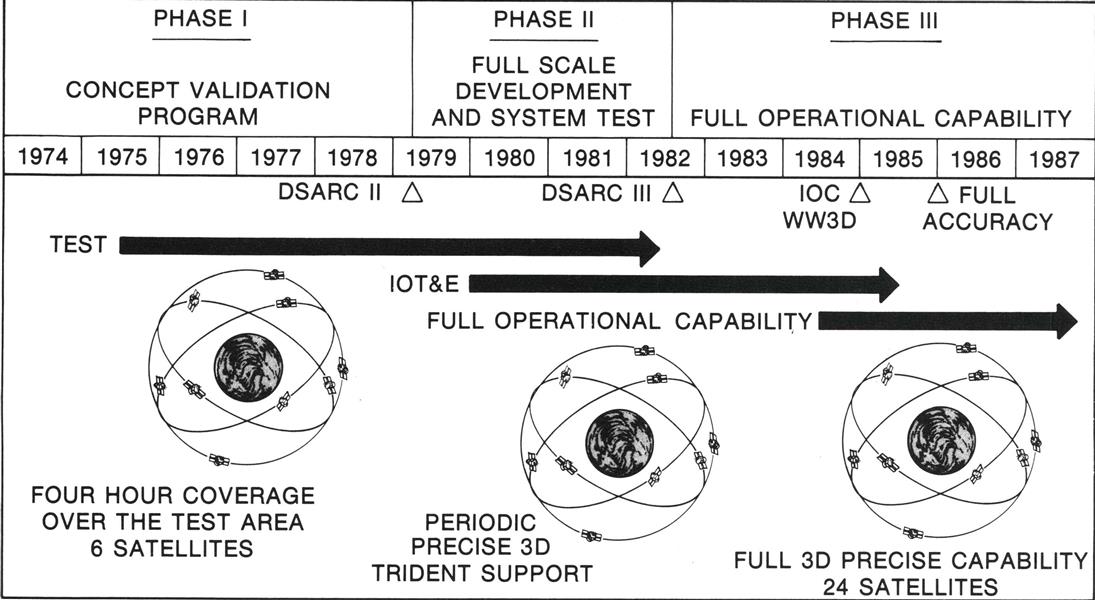
Timetable for deployment of initial six-satellite constellation of NavStar navigation satellites for operational test and evaluation and for a full 24-satellite system is shown. A problem is that the coarse acquisition signal, to be available to civil users, is exhibiting higher accuracy than expected, which would make it of considerable value to unfriendly military forces. The Pentagon is considering reducing its accuracy.
October 9, 1978
P. 60 (3 Pages)
Timetable for deployment of initial six-satellite constellation of NavStar navigation satellites for operational test and evaluation and for a full 24-satellite system is shown. A problem is that the coarse acquisition signal, to be available to civil users, is exhibiting higher accuracy than expected, which would make it of considerable value to unfriendly military forces. The Pentagon is considering reducing its accuracy.
 January 12, 1976
P. 45 (5 Pages)
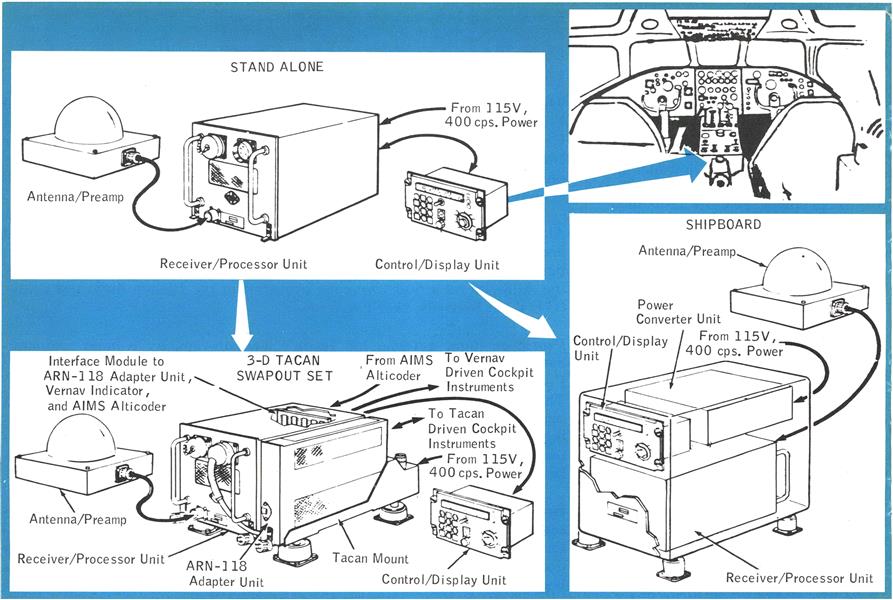
Diagram indicates how various users could get advantages of satellite navigation by utilizing low-cost, Z-model user equipment without necessitating extensive backfitting or modification. Receiver-processor of stand alone Z-model satellite navigation set can be substituted for ARN-118 Tacan receiver-transmitter box, permitting use of existing Tacan wiring. The satellite set would continue to provide range and bearing data for aircraft’s flight instruments and would output position data on its own control/display unit.
January 12, 1976
P. 45 (5 Pages)
Diagram indicates how various users could get advantages of satellite navigation by utilizing low-cost, Z-model user equipment without necessitating extensive backfitting or modification. Receiver-processor of stand alone Z-model satellite navigation set can be substituted for ARN-118 Tacan receiver-transmitter box, permitting use of existing Tacan wiring. The satellite set would continue to provide range and bearing data for aircraft’s flight instruments and would output position data on its own control/display unit.
 June 13, 1977
P. 71 (3 Pages)
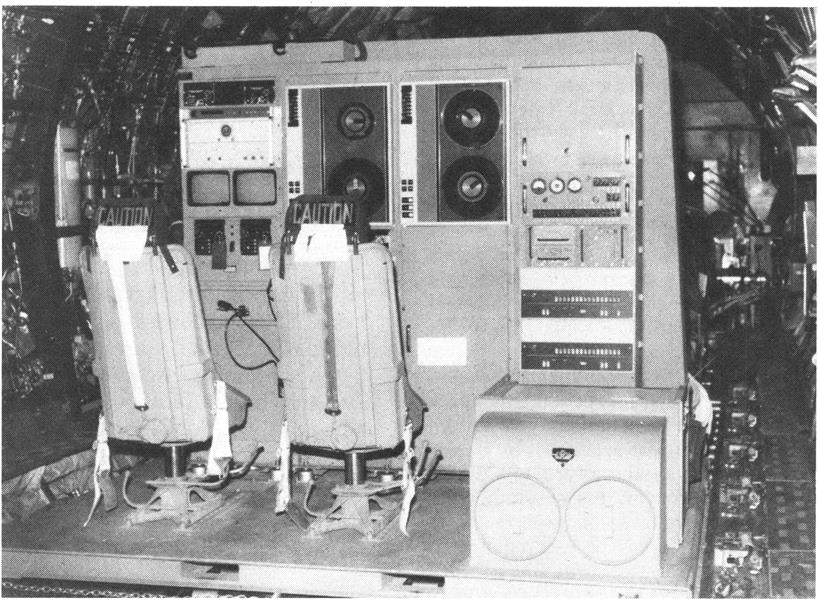
Test pallet containing user equipment and test hardware for the Navstar Global Positioning System is on board Lockheed C-141 transport for evaluation of user equipment.
June 13, 1977
P. 71 (3 Pages)
Test pallet containing user equipment and test hardware for the Navstar Global Positioning System is on board Lockheed C-141 transport for evaluation of user equipment.
 June 13, 1977
P. 71 (3 Pages)
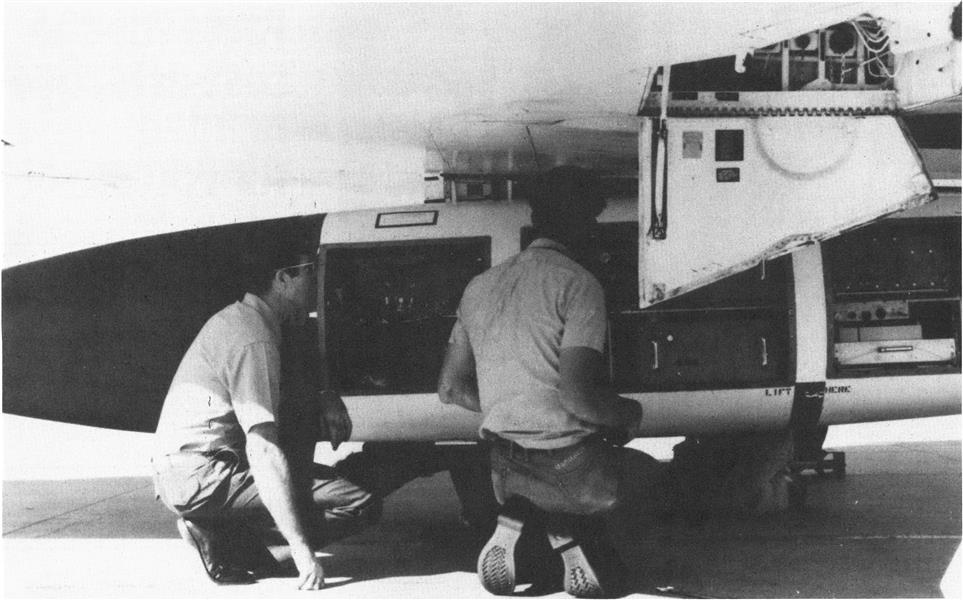
Global Positioning System pod mounted beneath Navy/McDonnell Douglas F-4 is checked out by ground crewmen in preparation for inverted range tests of the multiservice satellite navigation system at Army’s Yuma Proving Grounds. Pod contains Litton Industries’ inertial navigation system and brassboard models of system’s user
June 13, 1977
P. 71 (3 Pages)
Global Positioning System pod mounted beneath Navy/McDonnell Douglas F-4 is checked out by ground crewmen in preparation for inverted range tests of the multiservice satellite navigation system at Army’s Yuma Proving Grounds. Pod contains Litton Industries’ inertial navigation system and brassboard models of system’s user
 October 9, 1978
P. 60 (3 Pages)
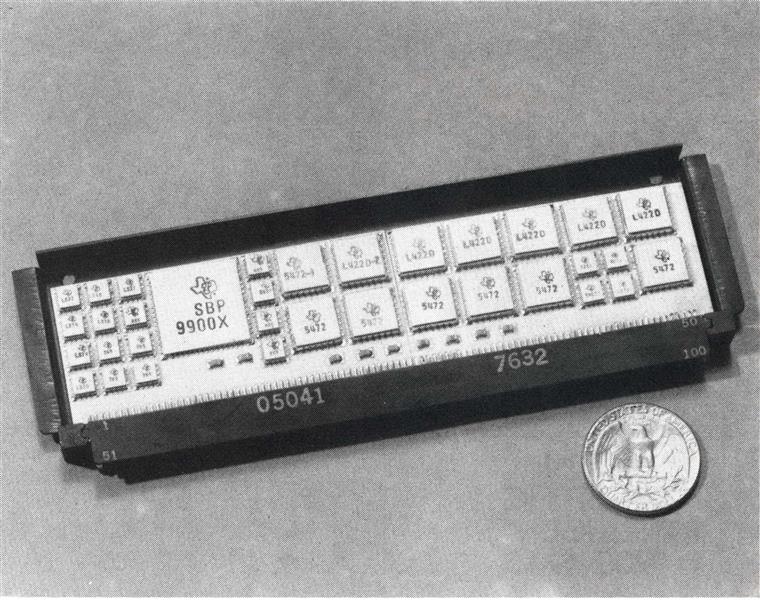
Prototype Microcomputer to Become Available 16-bit microcomputer, built in a Navy Standard Electronic Module (SEM) format and using the Texas Instruments SBP-9900 AMJ microprocessor chip, will be available in prototype quantities next spring, or on a larger 7.5 x 11-in. card late this year. The microcomputer includes 2K of 16-bit programmable read-only memory (PROM) and 1K of 16-bit random access memory (RAM), a 3 mc. clock, plus tristate memory bus interfaces and programmable
October 9, 1978
P. 60 (3 Pages)
Prototype Microcomputer to Become Available 16-bit microcomputer, built in a Navy Standard Electronic Module (SEM) format and using the Texas Instruments SBP-9900 AMJ microprocessor chip, will be available in prototype quantities next spring, or on a larger 7.5 x 11-in. card late this year. The microcomputer includes 2K of 16-bit programmable read-only memory (PROM) and 1K of 16-bit random access memory (RAM), a 3 mc. clock, plus tristate memory bus interfaces and programmable
 December 2, 1974
P. 46 (3 Pages)
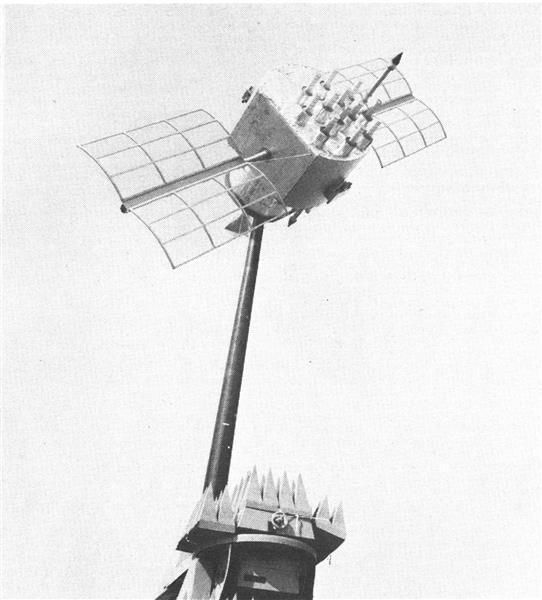
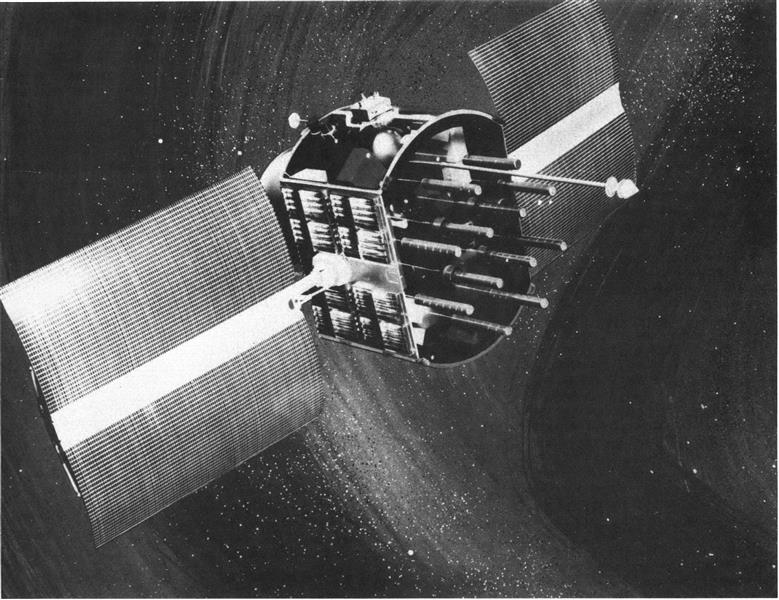
Pentagon is weighing accelerated schedule for the Navstar Global Positioning System, whose Phase-1 spacecraft is shown in sketch above, as possible alternative to earlier plans to retrofit military fleet with new Loran-C/D navaids. Original plan, which called for feasibility demonstration network of four spacecraft, has been expanded recently to six satellites plus spares, to permit Navsat use for missile tracking.
December 2, 1974
P. 46 (3 Pages)
Pentagon is weighing accelerated schedule for the Navstar Global Positioning System, whose Phase-1 spacecraft is shown in sketch above, as possible alternative to earlier plans to retrofit military fleet with new Loran-C/D navaids. Original plan, which called for feasibility demonstration network of four spacecraft, has been expanded recently to six satellites plus spares, to permit Navsat use for missile tracking.
 September 24, 1984
P. 73
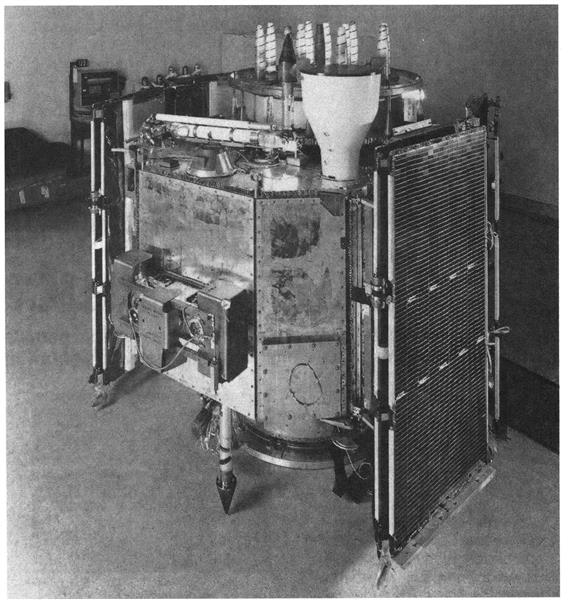
Qualification model of the Block 2 Navstar global positioning system (GPS) satellite is under test at Rockwell International’s Satellite Systems Div. in Seal Beach, Calif. The test model of the Navstar production spacecraft will undergo evaluation at Rockwell until early December, when it will be shipped to the Arnold Engineering Development Center for about four months of thermal vacuum chamber testing. The qualification model then will be returned to Rockwell for more testing before serving as a pathfinder vehicle for Navstar launch processing facilities in Florida. The first Navstar Block 2 flight vehicle is under construction and is scheduled to be launched from the space shuttle in 1986. The completed qualification model—not intended to be a flight vehicle—is shown without its external thermal insulation blankets.
September 24, 1984
P. 73
Qualification model of the Block 2 Navstar global positioning system (GPS) satellite is under test at Rockwell International’s Satellite Systems Div. in Seal Beach, Calif. The test model of the Navstar production spacecraft will undergo evaluation at Rockwell until early December, when it will be shipped to the Arnold Engineering Development Center for about four months of thermal vacuum chamber testing. The qualification model then will be returned to Rockwell for more testing before serving as a pathfinder vehicle for Navstar launch processing facilities in Florida. The first Navstar Block 2 flight vehicle is under construction and is scheduled to be launched from the space shuttle in 1986. The completed qualification model—not intended to be a flight vehicle—is shown without its external thermal insulation blankets.
 August 25, 1980
P. 63
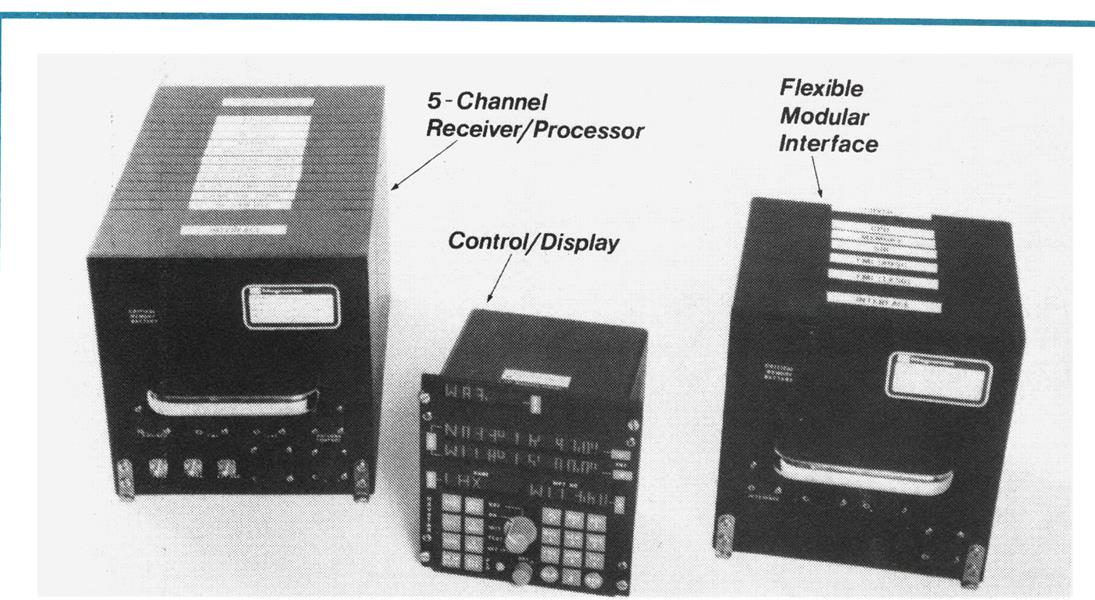
Major components of a Navstar Global Positioning System (GPS) receiver set designed for high performance aircraft by Magnavox Advanced Products and Systems Co. include a receiver/processor, control/display unit and an interface unit. Mockups of the three components are shown in the photograph above.
August 25, 1980
P. 63
Major components of a Navstar Global Positioning System (GPS) receiver set designed for high performance aircraft by Magnavox Advanced Products and Systems Co. include a receiver/processor, control/display unit and an interface unit. Mockups of the three components are shown in the photograph above.
 April 14, 1980
P. 20, 21
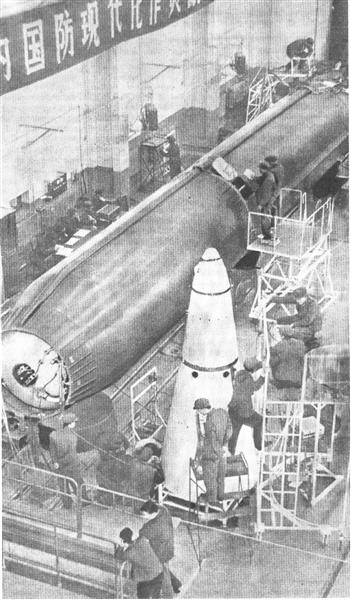
Chinese Building CSS-2 Missile
April 14, 1980
P. 20, 21
Chinese Building CSS-2 Missile
 September 26, 1983
P. 146 (6 Pages)
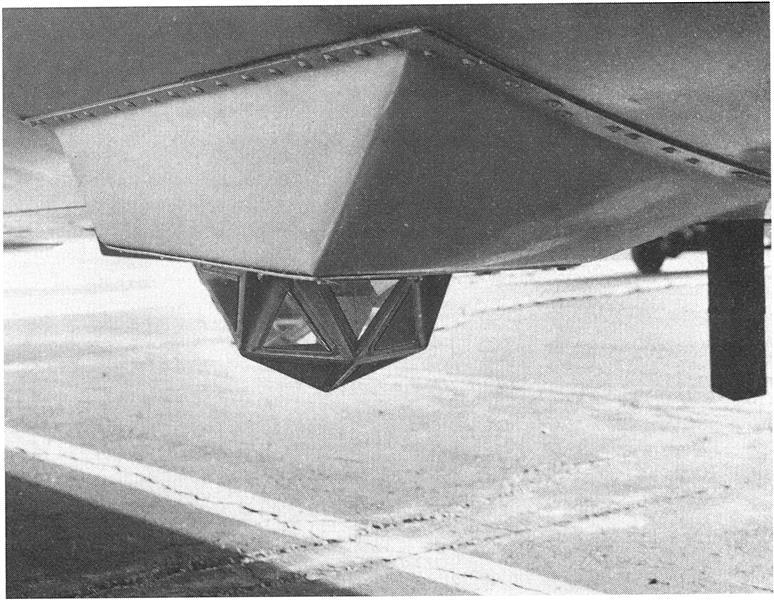
Retroreflector mounted on fuselage of a USAF/Lockheed C-141 aircraft during testing of Navstar receiver sets at the Yuma Proving Ground in Arizona earlier this year increased efficiency of ground-based laser trackers in providing an accuracy reference for GPS receivers installed in the aircraft. The laser trackers are accurate to within 1-2 meters.
September 26, 1983
P. 146 (6 Pages)
Retroreflector mounted on fuselage of a USAF/Lockheed C-141 aircraft during testing of Navstar receiver sets at the Yuma Proving Ground in Arizona earlier this year increased efficiency of ground-based laser trackers in providing an accuracy reference for GPS receivers installed in the aircraft. The laser trackers are accurate to within 1-2 meters.
 January 12, 1976
P. 45 (5 Pages)
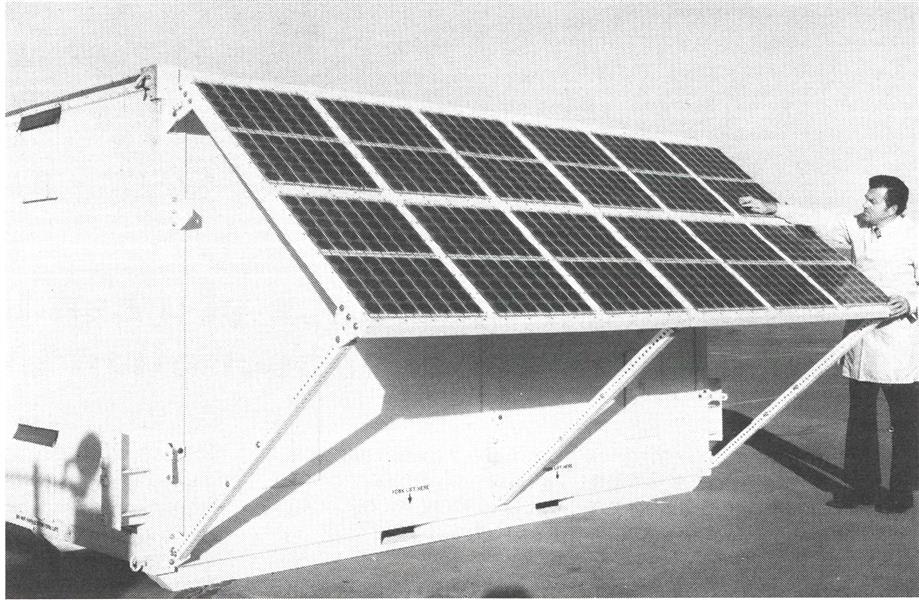
Four simulated satellite transmitters to be located in an inverted range at Army’s Yuma Proving Ground will be powered by solar cells (below), mounted on panel attached to equipment shelter.
January 12, 1976
P. 45 (5 Pages)
Four simulated satellite transmitters to be located in an inverted range at Army’s Yuma Proving Ground will be powered by solar cells (below), mounted on panel attached to equipment shelter.
 December 2, 1974
P. 46 (3 Pages)
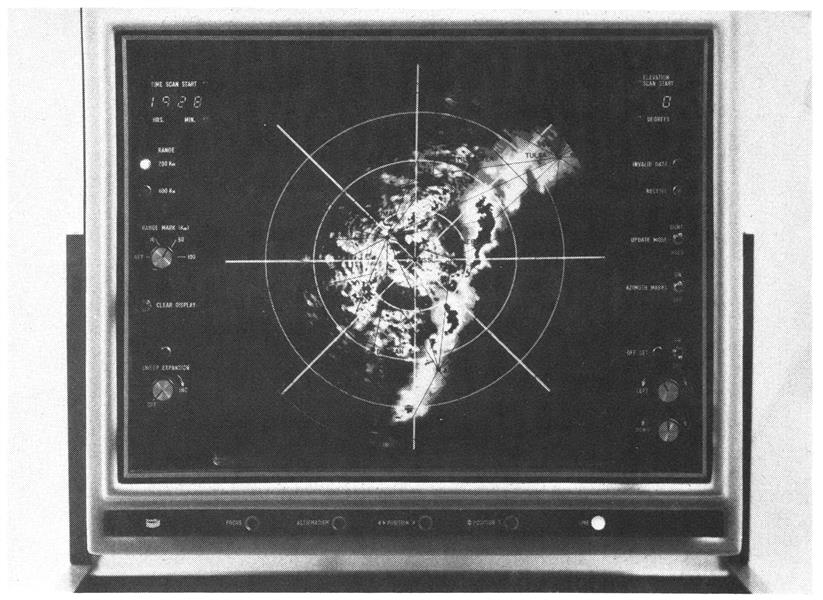
Flicker-Free Radar Display Being Tested
December 2, 1974
P. 46 (3 Pages)
Flicker-Free Radar Display Being Tested
 October 8, 1979
P. 45
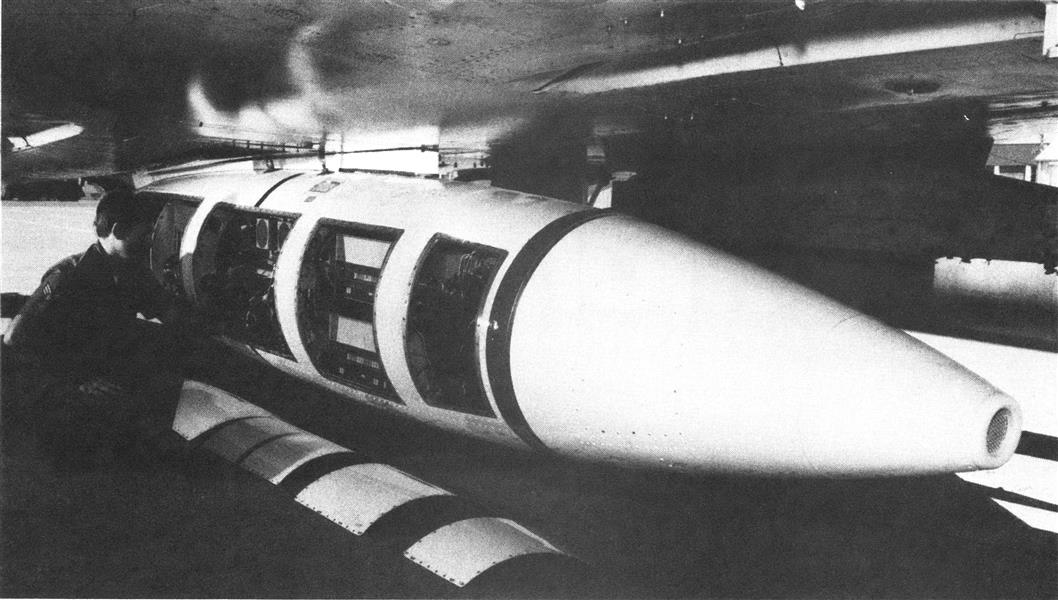
Initial flight tests are under way at Eglin AFB, Fla., of a Navstar global positioning system to guide tactical missiles to their targets. The tests will include study of a prototype GPS tactical missile receiver system, developed by Hughes Aircraft Co.’s Missile Systems Group, mounted in a modified centerline fuel tank pod on
October 8, 1979
P. 45
Initial flight tests are under way at Eglin AFB, Fla., of a Navstar global positioning system to guide tactical missiles to their targets. The tests will include study of a prototype GPS tactical missile receiver system, developed by Hughes Aircraft Co.’s Missile Systems Group, mounted in a modified centerline fuel tank pod on
 June 7, 1982
P. 91 (3 Pages)
June 7, 1982
P. 91 (3 Pages)
 September 26, 1983
P. 146 (6 Pages)
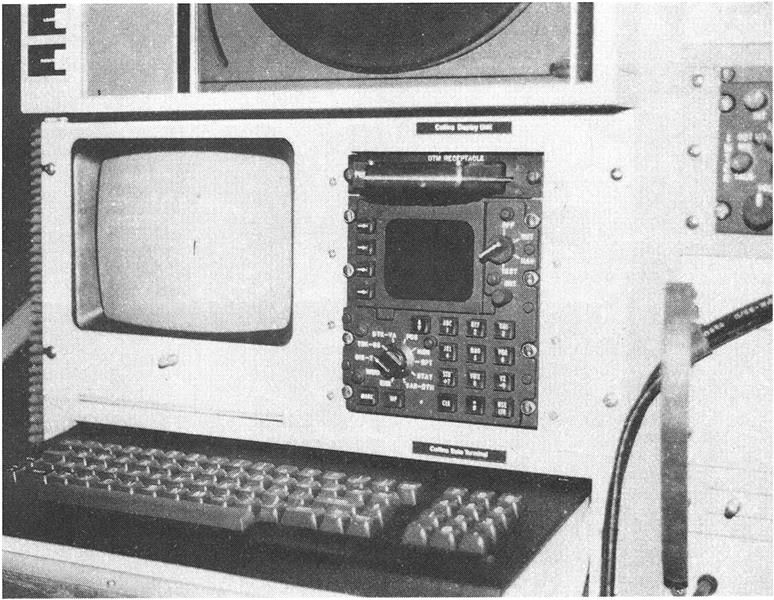
Rockwell-Collins two-channel Navstar receiver unit (center) is flanked by an engineering display, recorder, keyboard and other test equipment on a USAF/Lockheed C-141 transport. The C-141 was used by Rockwell and Magnavox for testing of GPS Phase-2 receivers.
September 26, 1983
P. 146 (6 Pages)
Rockwell-Collins two-channel Navstar receiver unit (center) is flanked by an engineering display, recorder, keyboard and other test equipment on a USAF/Lockheed C-141 transport. The C-141 was used by Rockwell and Magnavox for testing of GPS Phase-2 receivers.