January 15, 1920

Impressions of the Chicago Aeronautical Show

Superchargers and Supercharging Engines

An Investigation of Airplane Fuels

522523

Impressions of the Chicago Aeronautical Show

The dominant feature of the Chicago Aeronautical Show was its commercial character. With the exception of a Navy training plane and a war-worn Spad, the machines exhibited were purely transport and pleasure types. Aircraft manufacturers did not present any military craft because they undoubtedly realize that the time has come where commercial aircraft will exert an ever growing appeal to the public, which in the end will become the principal user of flying machines and airships.

532533

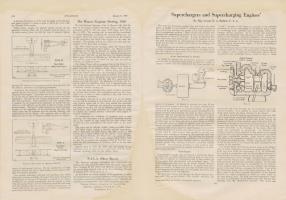
Superchargers and Supercharging Engines

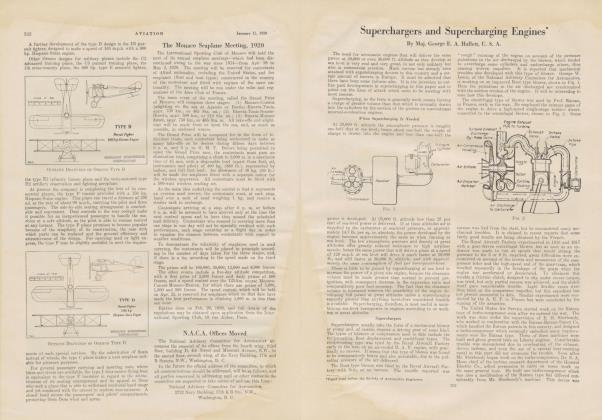
The need for aeronautic engines that will deliver the same power at 20,000 or even 30,000 ft. altitude as they develop at sea level is very real and very great, in not only military but also in commercial aviation. Much success has already been attained with supercharging devices in this country and a certain amount of success in Europe.

536537

An Investigation of Airplane Fuels

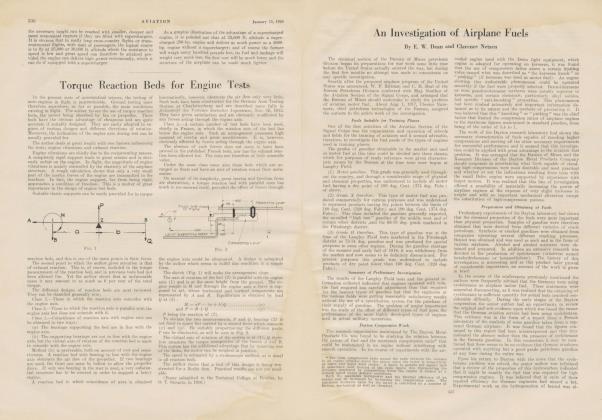
The chemicul section of the Bureau of Mines petroleum division began its preparations for war work some little time before the United States actually entered the war, but during the first few months no attempt was made to concentrate on any specific investigation.

526527

The Aeromarine Model 40 Flying Boat

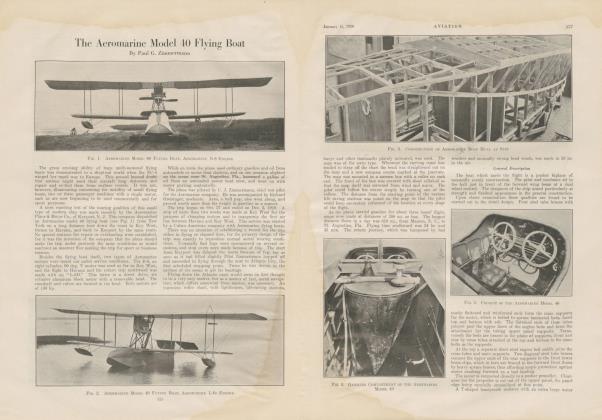
The great cruising ability of huge multi-motored flying boats was demonstrated to a skeptical world when the NC-4 winged her rapid way to Europe. This proved beyond doubt that nations might send their aircraft long distances and repair and re-fuel them from surface vessels.

538539

Velocity and Stresses in a Glide

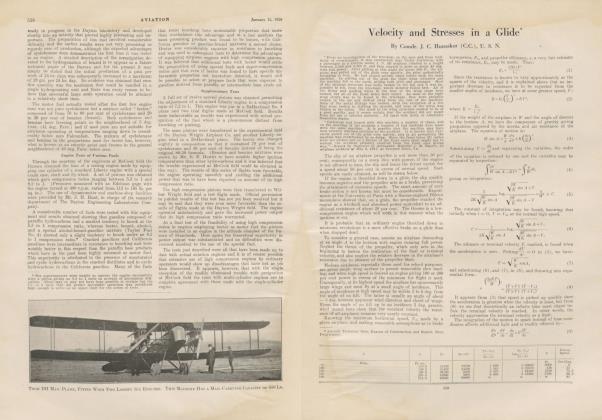
"From an investigation of the wreckage on the spot and from testimony of eyewitnesses, it was established that Victor Carlstrom with a passenger in a Curtiss model J. N. 4B airplane climbed to a height between 2,500 and 3,500 ft. and then started to glide at about 45 deg., with full power.

528529

The Goodyear Type A Pony Blimp

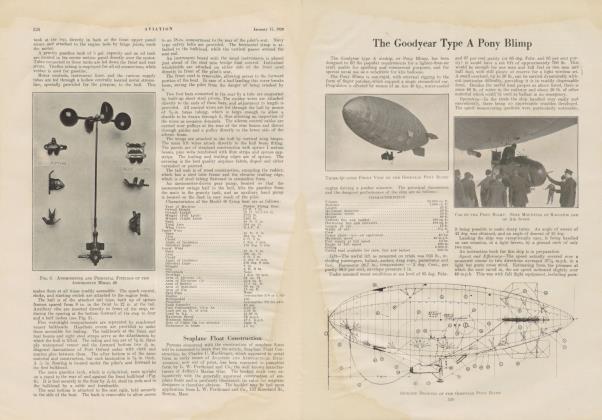
The Goodyear type A airship, or Pony Blimp, has been designed to fill the popular requirements for a lighter-than-air craft usable for sporting and commercial purposes, and for special naval use as a substitute for kite balloons. The Pony Blimp is non-rigid, with external rigging in the form of finger patches, which support a single streamlined car.
524525

McCook Field and the Airplane Industry

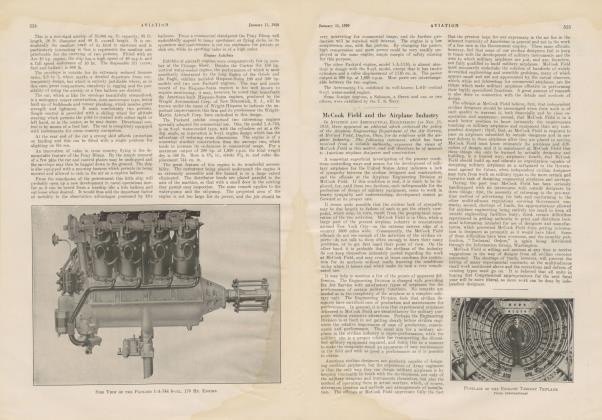
In AVIATION AND AERONAUTICAL ENGINEERING for Nov. 15, 1919, there appeared an editorial which criticized the policy of the Airplane Engineering Department of the Air Service, at McCook Field, Dayton, Ohio, for its relations with the airplane industry.
536537

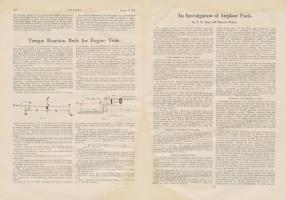
Torque Reaction Beds for Engine Tests

In the present state of aeronautical science, the testing of aero-engines in flight is impracticable. Ground testing must therefore reproduce, as far as possible, the main conditions existing in fight. The author favors the use of torque reaction beds, the power being absorbed by fan or propeller.
520521

Editorials

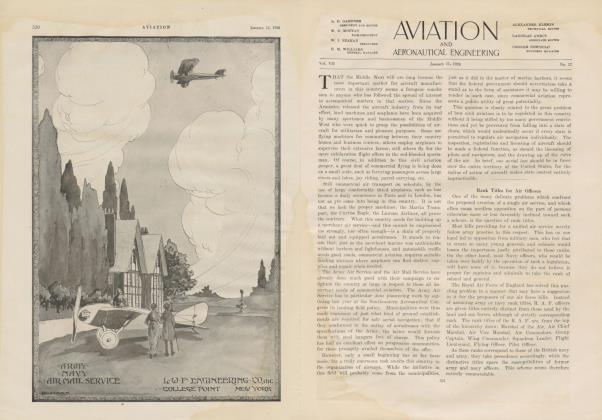
THAT the Middle West will ere long become the most important market for aircraft manufacturers in this country seems a foregone conclusion to anyone who has followed the spread of interest in aeronautical matters in that section. Since the Armistice released the aircraft industry from its war effort, land machines and seaplanes have been acquired by many sportsmen and businessmen of the Middle West who were quick to grasp the possibilities of aircraft for utilitarian and pleasure purposes.
540541

The Variable Angle of Incidence Airplane

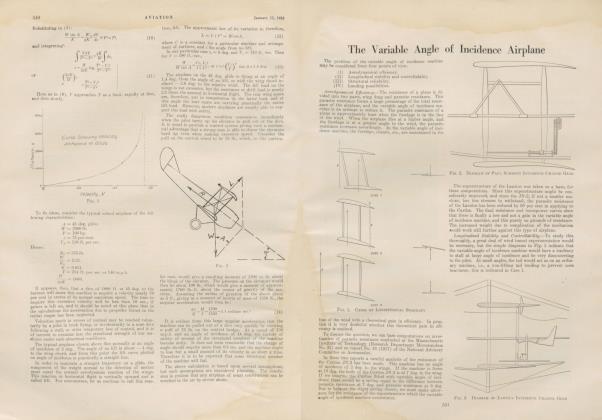
The problem of the variable angle of incidence machine may be considered from four points of view. (I) Aerodynamical efficiency. (II) Longitudinal stability and controllability. (III) Structural reliability. (IV) Landing possibilities.
JANUARY 11920 FEBRUARY 11920