May 1, 1920

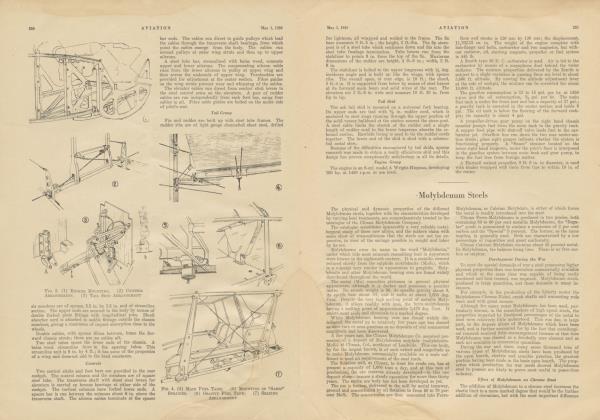
The Junkers Armored Two-Seater Biplane. Type J. 1

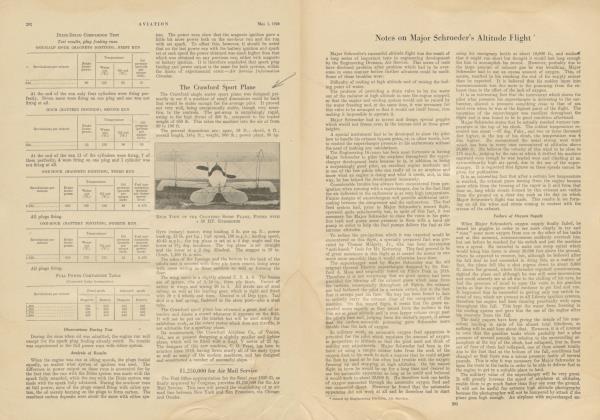
The Orenco Type F Tourister Airplane

Notes on Major Schroeder’s Altitude Flight

284285

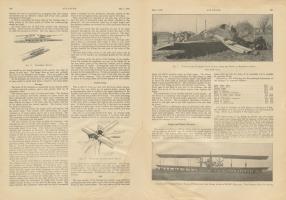
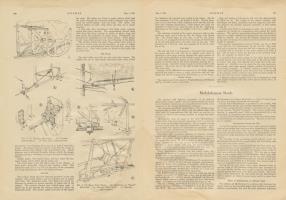
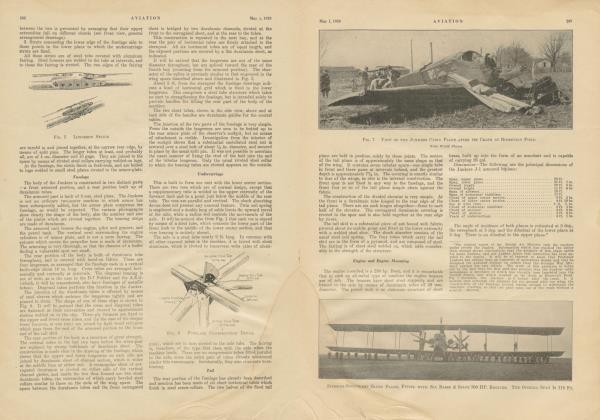
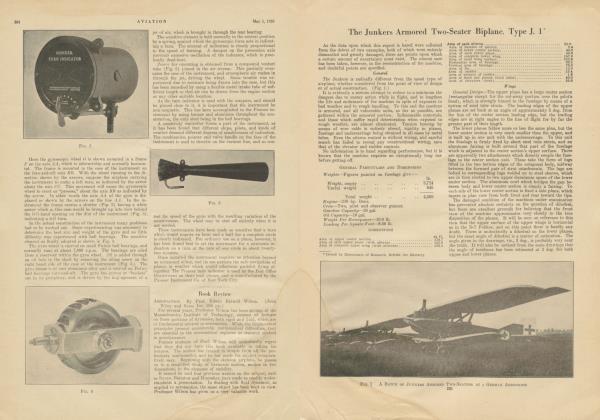
The Junkers Armored Two-Seater Biplane. Type J. 1

As the data upon which this report is based were collected from the debris of two examples, both of which were entirely dismantled and greatly damaged, there are points upon which a certain amount of uncertainty must exist. The utmost care has been taken, however, in the reconstruction of the machine, and doubtful points are specified.
278279

The Orenco Type F Tourister Airplane

Flight tests of the Orenco type F tourist plane have given proof that the design is most satisfactory for cross-country touring and passenger carrying. The type F is the first commercial design of the Ordnance Engineering Corp.; heretofore the aircraft department of the company has been exclusively engaged in supplying airplanes to the United States government, but while still building late types of military aircraft, the success of its first commercial plane serves as an encouraging beginnig for the series of original sport and commercial types now under consideration.
292293

Notes on Major Schroeder’s Altitude Flight

Major Schroeder’s successful altitude flight was the result of a long series of important tests in engineering development by the Engineering Division, Air Service. This series of tests have disclosed problem after problem which had to be overcome in some manner before further advances could be made.
280281

Molybdenum Steels

The physical and dynamic properties of the different Molybdenum steels, together with the characteristics developed by varying heat treatments, are comprehensively treated in the catalogue of the Climax Molybdenum Company. The catalogue constitutes apparently a very reliable metallurgical study of these new alloys, and the makers claim with some show of reasonableness that the steels are not too expensive, in view of the savings possible in weight and labor by its use.
290291

Comparative Merits of Dixie Magnetos and Delco Battery Ignition System When Used on a Liberty "12" Aero Engine

Object of Test To determine the comparative ability of Dixie magnetos and the Delco battery system to keep spark plugs firing in the Liberty engine under adverse conditions and to determine the difference in resultant power output with the two systems, if any exists.
290291

The Vibration of Spars in Aircraft

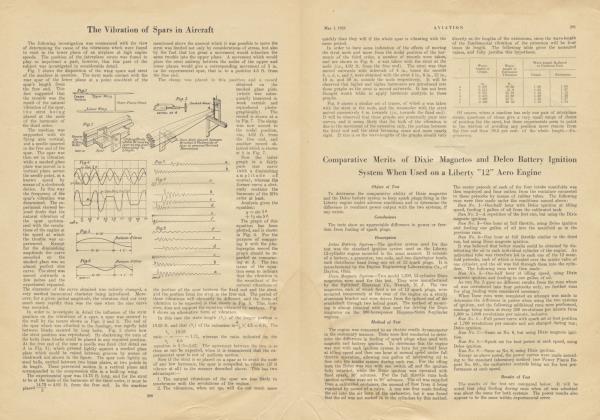
The following investigation was commenced with the view of determining the cause of the vibrations which were found to exist in the lower plane of an airplane at high engine speeds. The position of the interplane struts was found to play so important a part, however, that this part of the subject was investigated in considerable detail.
282283

Work of Medical Division, Air Service

The War Department authorizes publication of the following from the office, Director of Air Service: Two medical developments achieved during the war were the establishment of a separate branch of the Surgeon General’s Office to investigate and handle the medical problems peculiar to the Air Service and the development of that specialized medical officer known as the Flight Surgeon.
294295

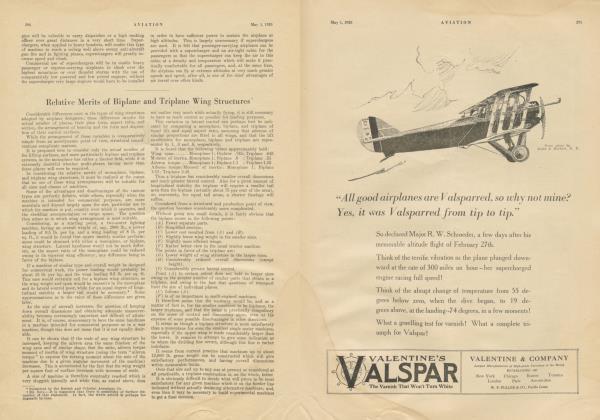
Relative Merits of Biplane and Triplane Wing Structures

Considerable differences exist in the types of wing structures adopted by airplane designers; these differences involve the actual number of planes, their plan form, aspect ratio, and section, the arrangement of bracing and the form and disposition of their control surfaces.
276277

Editorials

IN considering the possibility of an American machine entering for the Gordon-Bennett Cup Race, American designers have been discouraged by the fact that no American air-cooled engines of large power are available. Whether this is indeed a serious drawback, is a question of some doubt.
282283

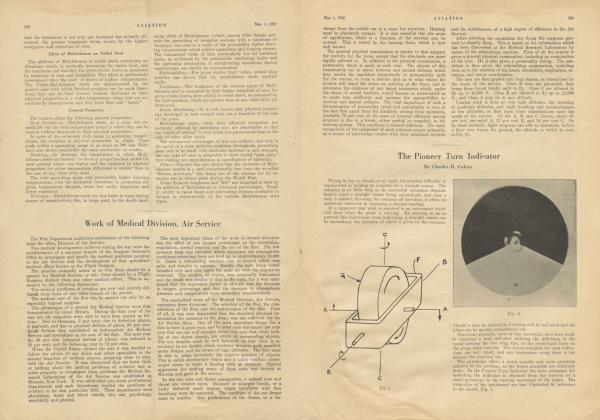
The Pioneer Turn Indicator

Flying in log or clouds, or at night, the greatest difficulty is experienced in holding an airplane on a straight course. The compass is of little help as its successful operation depends largely upon a straight course being maintained; and once a turn is started, throwing the compass off meridian, it offers no assistance whatever in regaining a desired heading.

APRIL 151920 MAY 151920