September 1, 1920

Possibilities of a Trans-Pacific Flight

An Improved A. P. Kite Balloon

The Slow Speed Airplane

8283

Possibilities of a Trans-Pacific Flight

The following study of the possibilities of a trans-Pacific flight has been made in the attempt to collect all the available information regarding the conditions upon which such a flight would depend. These flight conditions may be grouped under the following heads:

8889

An Improved A. P. Kite Balloon

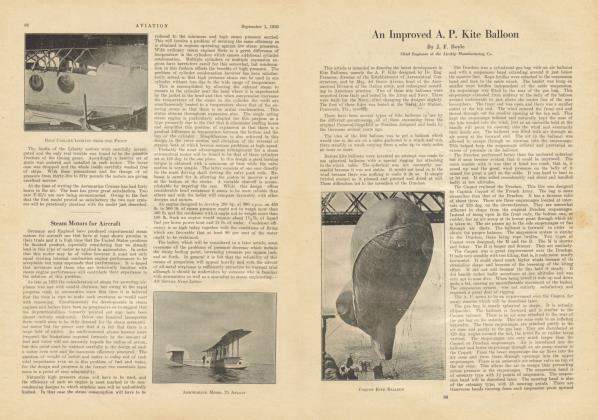
This article is intended to describe the latest development in Kite Balloons, namely the A. P. Kite designed by Dr. Eng. Prassone, director of the Establishment of Aeronautical Construction, and by Maj. del Genio Avorio, head of the Aeronautical Division of the Italian army, and redesigned according to American practice.

8081

The Slow Speed Airplane

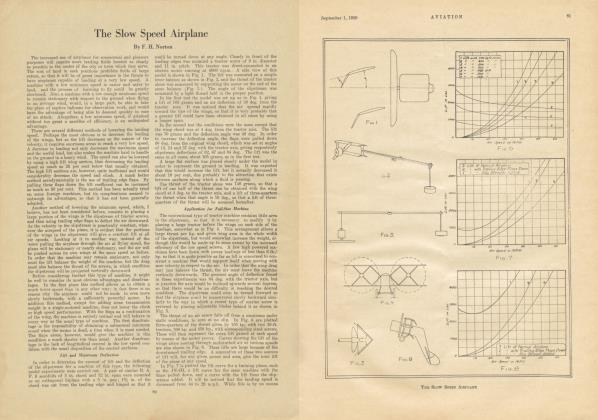
The increased use of airplanes for commercial and pleasure purposes will require more landing fields located as closely as possible to the center of the city or town which they serve. The cost of land in such positions prohibits fields of large extent, so that it will be of great importance in the future to have airplanes capable of landing at a very low speed.

9293

The London Aero Exhibition

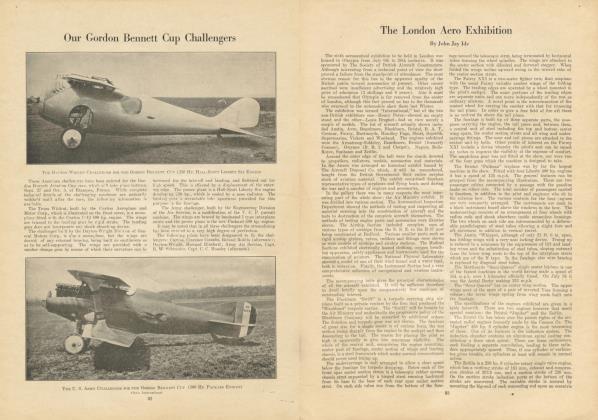
The sixth aeronautical exhibition to be held in London was housed in Olmypia from July 9th to 20th inclusive. It was sponsored by The Society of British Aircraft Constructors. Although interesting from a technical point of view the show proved a failure from the standpoint of attendance.

8687

Adapting an F-5L Flying Boat to Air Transport

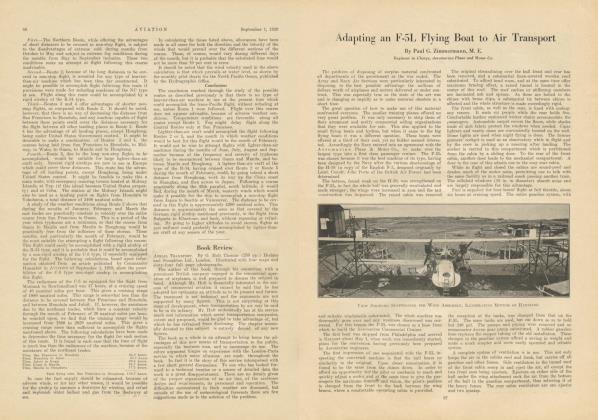
The problem of disposing of surplus material confronted all departments of the government as the war ended. The Army and Navy Air Services were particularly interested in disposing to the best possible advantage the millions of dollars worth of airplanes and motors delivered or under contract.

7879

Editorials

THE safe arrival of four Army De Havilands on Alaskan soil is another triumph of cross continent flying which we may all be proud of. Though the undertaking was accompanied by numerous dangers which could only be surmounted by great skill and daring, the feat has not been accorded the publicity which other flights have received,— whether from the lack of the spectacular or for what reason unknown.
8889

Steam Motors for Aircraft

Germany and England have produced experimental steam motors for aircraft use that have at least shown promise in their trials and it is high time that the United States produces the finished product, especially considering that we already lead in this type of motor as applied to automobiles.
8283

Size and Performance of Rigid Airships

An interesting paper on rigid airship engineering was recently read before the British Institution of Naval Architects by C. I. R. Campbell and H. May. The paper indicates the performance which may be expected from future airships of the rigid type as compared with those already obtained and also deals with points of special interest in design and construction.
9495

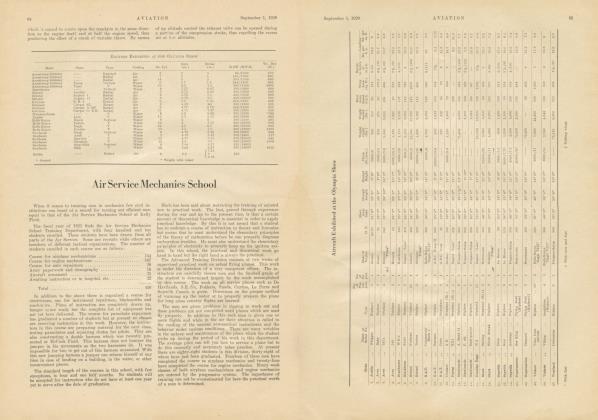
Air Service Mechanics School

When it comes to training men in mechanics few civil institutions can boast of a record for turning out efficient men equal to that of the Air Service Mechanics School at Kelly Field. The fiscal year of 1921 finds the Air Service Mechanics School Training Department, with four hundred and ten students enrolled.
9697

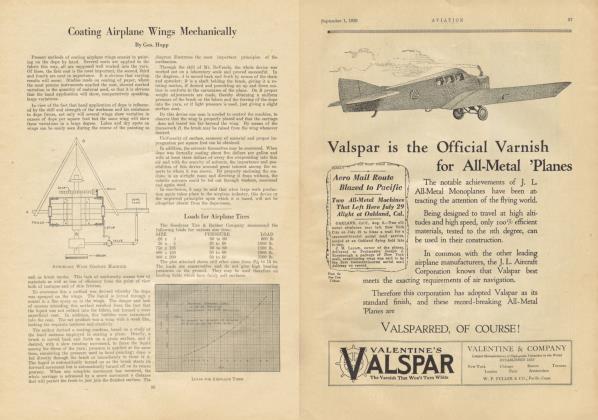
Coating Airplane Wings Mechanically

Present methods of coating airplane wings consist in painting on the dope by hand. Several coats are applied to the fabric this way, all are supposed well worked into the yarn. Of these, the first coat is the most important, the second, third and fourth are next in importance.

AUGUST 151920 SEPTEMBER 151920