December 13, 1920

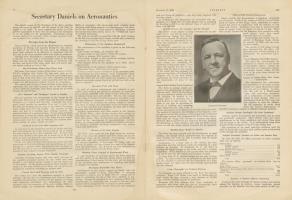
Secretary Daniels on Aeronautics

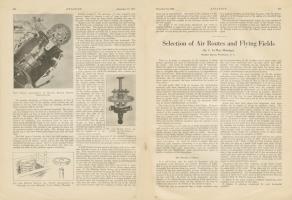
Selection of Air Routes and Flying Fields

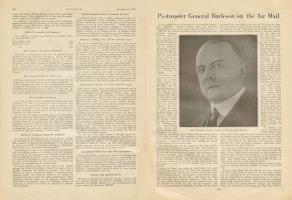
Postmaster General Burleson on the Air Mail

414415

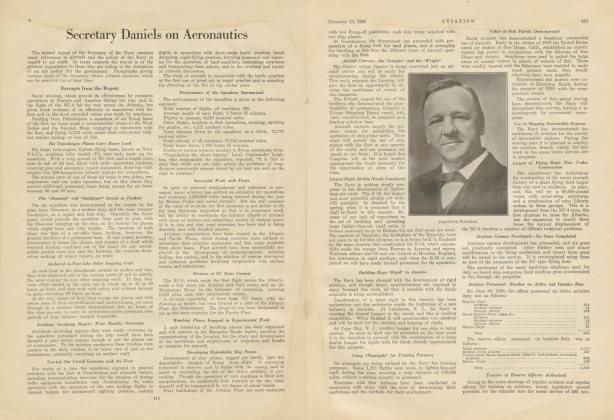
Secretary Daniels on Aeronautics

The annual report of the Secretary of the Navy contains many references to aircraft and the policy of the Navy in regard to air work. In many respects the report is of the greatest importance to those who are aiding in the formation of an air policy for the government.
422423

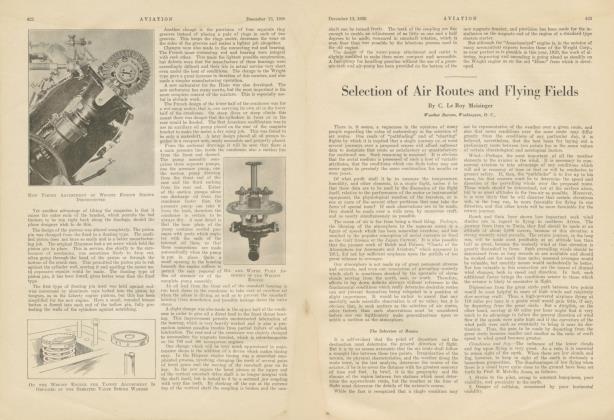
Selection of Air Routes and Flying Fields

There is, it seems, a vagueness in the opinions of many people regarding the value of meteorology in the selection of air routes. One reads of “pathfinding” and of “charting” flights by which it is implied that a single journey or, at most several journeys over a proposed course will afford sufficient data to designate that route as satisfactory or unsatisfactory for continued use.

416417

Postmaster General Burleson on the Air Mail

In the annual report of the work of the Postoffice Department, Postmaster General Burleson gives the following interesting summary of the work of the Air Mail Service: The Air Mail Service operated during the fiscal year with increased efficiency, increased saving in car space, and greater expedition of the mail through the extension of the service to additional commercial centers.
420421

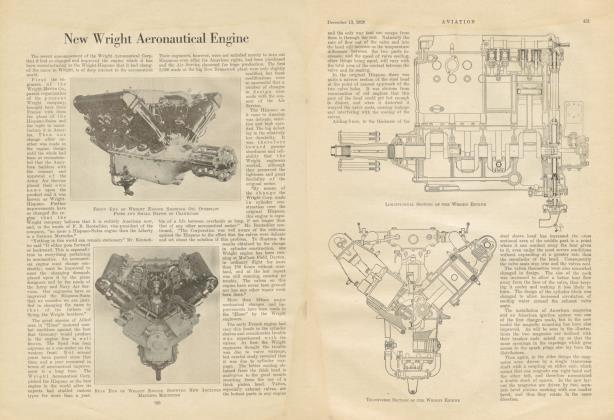
New Wright Aeronautical Engine

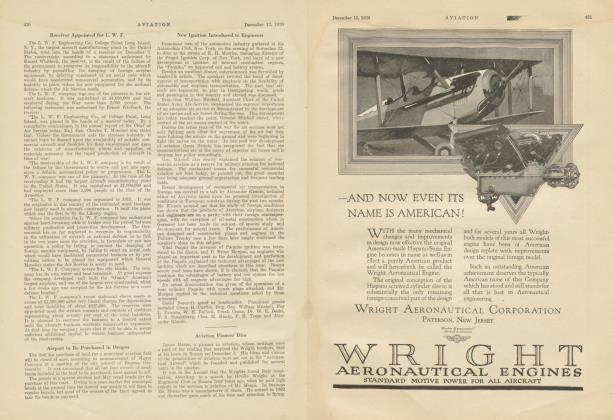
The recent announcement of the Wright Aeronautical Corp. that it had so changed and improved the engine which it has been manufacturing as the Wright-Hispano that it had changed the name to Wright, is of deep interest in the aeronautical world.
426427

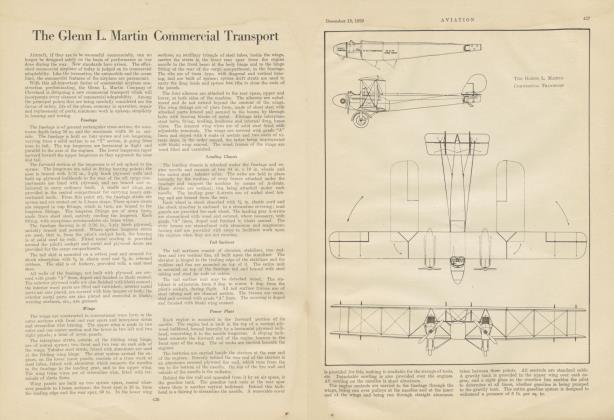
The Glenn L. Martin Commercial Transport

Aircraft, if they are to be successful commercially, can no longer be designed solely on the basis of performance as was done during the war. New standards have arisen. The efficicient commercial airplane of today is judged on its commercial adaptability.
412413

Editorials

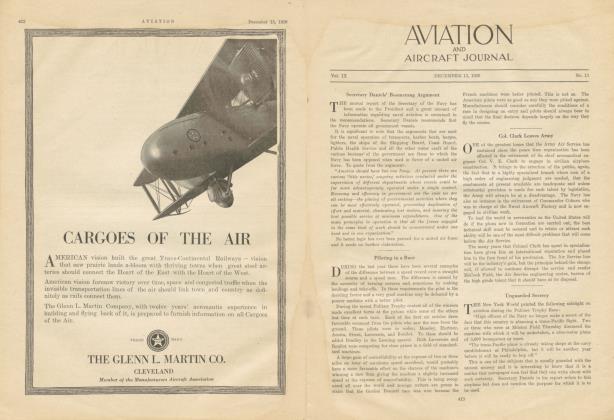
Secretary Daniels’ Boomerang Argument THE annual report of the Secretary of the Navy has been made to the President and a great amount of information regarding naval aviation is contained in the recommendations. Secretary Daniels recommends that the Navy operate all government vessels.
430431

Receiver Appointed for L. W. F.

The L. W. F. Engineering Co., College Point, Long Island, N. Y., the largest aircraft manufacturing plant in the United States, went into the hands of a receiver on December 3. The receivership, according to a statement authorized by Ernest Whitbeck, the receiver, is the result of the failure of the government to recognize its responsibility to the aircraft industry by permitting the dumping of foreign surplus equipment, by delaying enactment of an aerial code which would have accelerated commercial aeronautics, and by its inability to place orders for new equipment for the national defense which the Air Service needs.
430431

New Ignition Introduced to Engineers

Prominent men of the automotive industry gathered at the Automobile Club, New York, on the evening of November 23, to dine as the guests of E. H. Morrice, managing director of the Paquit Ignition Corp. of New York, and learn of a new development in ignition of internal combustion engines, the “Paquito,” an improved coil and battery system.
428429

Apparatus for Making and Handling Hydrogen

The Experimental Station at Fort Omaha is conducting experiments in apparatus for the handling and manufacture of hydrogen gas for balloons. This work is of importance because, with the coining of large dirigibles and the general expansion of the lighter-than-air branch of the service great quantities of this gas at a reasonable price are necessary.
428429

The Paquito Ignition System

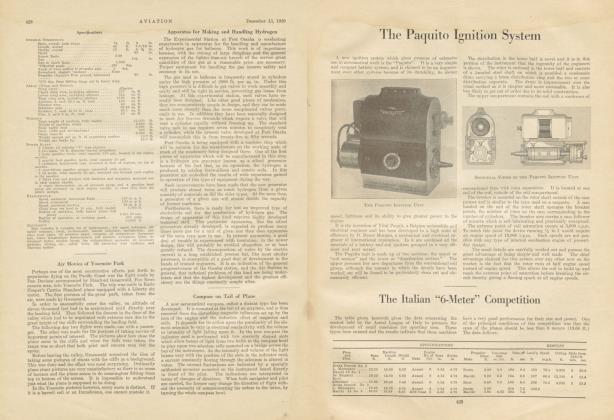
A new ignition system which gives promise of extensive use in aeronautical work is the “Paquito”. It is a very simple and compact battery system, and is claimed to be an improvement over other systems because of its durability, its slower speed, lightness and its ability to give greater power to the engine.
DECEMBER 61920 December 201920